



Memory care programs support individuals living with Alzheimer’s disease and other forms of dementia by creating safe, compassionate environments that prioritise dignity, emotional well-being, and meaningful daily experiences.
Key things to know:
Cognitive impairment can change how a person experiences the world, but not who they are. For individuals living with Alzheimer’s disease or other forms of dementia, each day brings unique challenges, as well as opportunities for comfort, connection and meaningful moments.
Memory care is about more than managing symptoms. It is about creating an environment where individuals feel safe, understood and valued. With the right approach, memory care can support dignity, emotional well-being and a continued sense of purpose, even as cognitive needs evolve. By focusing on what individuals can still experience and enjoy, memory care helps ensure that each day remains meaningful, familiar and grounded in compassion.
At Seasons Retirement Communities, our dedicated team is always looking for new ways to improve the lives of our residents. As the Canadian population ages, experts suggest that an increasing number of seniors and their families will be affected by dementia and Alzheimer’s disease. According to the Alzheimer Society of Canada, over 500,000 are Canadians living with dementia today. They project the number of Canadians living with dementia in 2030 will be closer to a million.
When a loved one is diagnosed with dementia or Alzheimer’s disease, the experience affects the entire family. Alongside practical concerns, families often face feelings of grief, uncertainty, and worry about how best to support their loved one whose needs are changing. Seasons responded to this reality by developing a person-centred Memory Care program for seniors living with dementia and Alzheimer’s disease. Choosing memory care is rarely an easy decision, and it often comes after months or even years of caregiving at home. Memory care communities play an important role not only in supporting residents, but also in helping families feel reassured, informed and included. Open communication, education and ongoing collaboration help families feel confident that their loved one is being cared for with dignity and compassion.
Our Memory Care areas incorporate bright, open spaces that feel like home and are comfortable for residents and visitors alike. In our newer residences, we include private outdoor spaces to promote freedom of movement and to ensure nature is close by.
Furthermore, we provide engaging tools that encourage conversation for families and staff to connect with residents. This so-called enabling of the environment is one branch of our Embrace Today® philosophy that promotes wellness and positive interactions for our residents living with dementia and Alzheimer’s.
Stephanie Sanborn, Senior Director of Innovation and Education, was instrumental in building the Seasons Memory Care program. “We understand the importance of hiring for the heart to build authentic relationships with our residents and their families,” says Stephanie. “We believe that positive relationships among all care partners elevates person-centred care and makes it more meaningful.”
Each of our highly-trained service team members commits to Embrace Today® which means they approach the workday with a promise to do their best to make all interactions positive and meaningful, one moment at a time.
Because of this, Seasons also fosters an unhurried environment, where building genuine friendships with residents and their families is prioritized over daily routine. We strive to understand who our residents are to adjust our interactions and respond with whatever is needed at the time.
Additionally, we work with our residents and their loved ones to create a Legacy Today journal. Through this journal, we acknowledge and celebrate moments shared at Seasons, as well as documenting elements of a resident’s life story. When we understand someone’s past accomplishments and interests, for example, it strengthens our connection with them. Life stories shape our care plans, allow us to create “Wow Moments” that truly matter, and help us empower our residents to continue building their legacy while at Seasons.
Collaboration with family members and healthcare professionals allows us to:
One of the most meaningful aspects of person-centred memory care is the focus on preserving identity. Cognitive changes may affect memory, but they do not erase a person’s history, personality, or values. Understanding who a resident is beyond their diagnosis allows care teams to tailor interactions in ways that feel familiar and respectful. Small details such as favourite music, preferred routines or lifelong hobbies help create moments of recognition and comfort, reinforcing a sense of self even as cognitive abilities change.
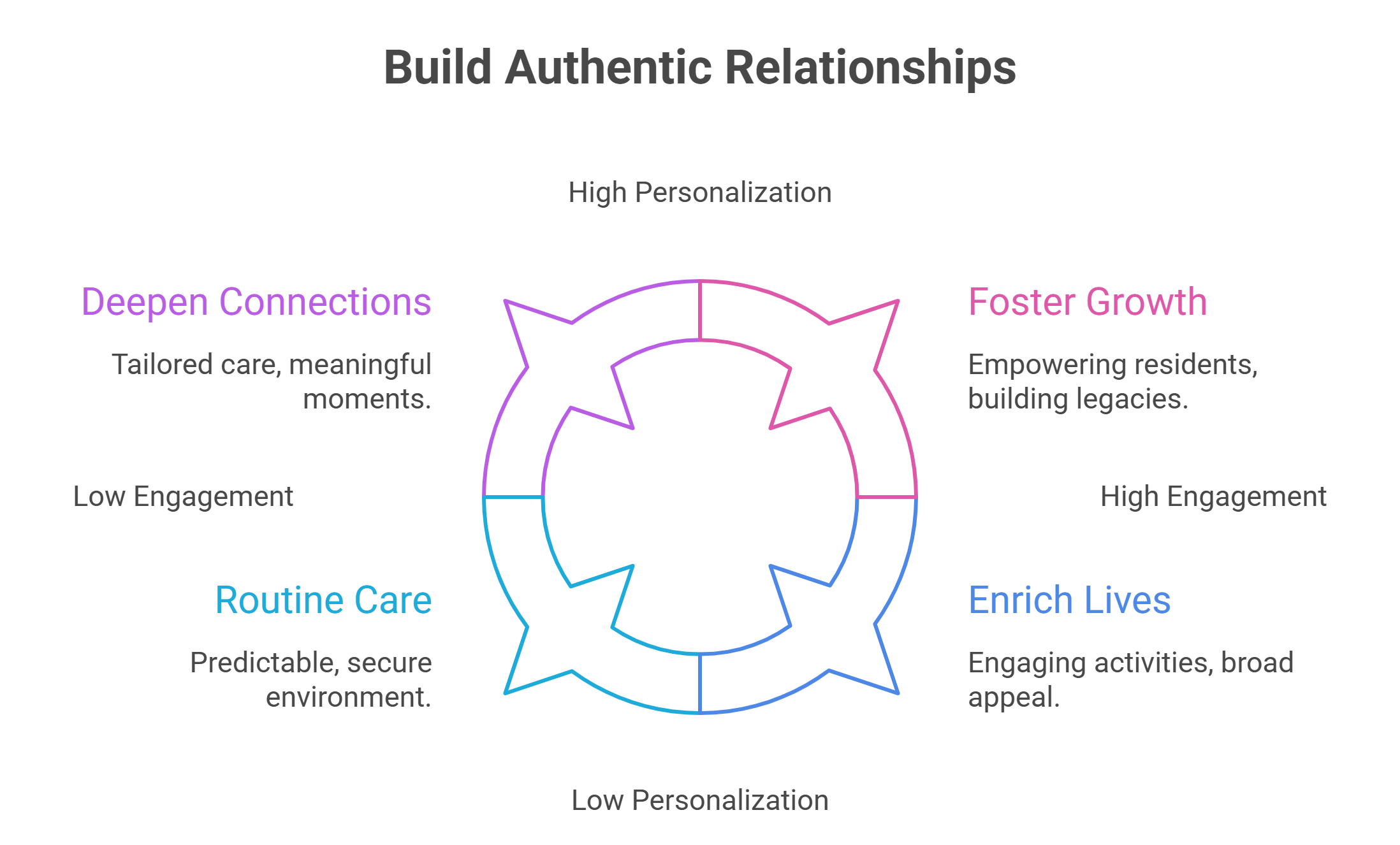
Consistency plays an essential role in supporting individuals living with memory loss. Familiar routines, predictable daily rhythms, and recognizable faces help reduce anxiety and create a sense of security. When residents know what to expect from their day, they are more likely to feel calm, comfortable, and confident within their environment. Consistency also supports trust, allowing residents to build meaningful relationships with care team members over time. These steady patterns do not eliminate flexibility, but rather provide a reliable foundation that helps residents navigate changes more easily. In memory care, even small consistencies – such as routine meal times, repeated activities or consistent cues – can contribute to emotional stability and a greater sense of well-being.
The physical environment plays a critical role in how individuals with cognitive impairment experience daily life. Clear sightlines, calming colour palettes, access to natural light and safe outdoor spaces can help reduce anxiety and confusion while promoting independence. Thoughtfully designed memory care spaces allow residents to move freely and safely, supporting autonomy rather than restriction, while creating a sense of comfort and familiarity throughout the day.
Our activity calendar for residents in Memory Care is flexible, yet progressively balanced to incorporate the elements of the mind and spirit, like brain-enhancing games, exercises and physical activity routines, and calming meditative programs to promote sleep and happiness daily.
In Ontario, we have designated memory care areas in Amherstburg, Brantford, Cambridge, Milton, Royal Oak Village in LaSalle, St. Catharines, St. Thomas, Stoney Creek, and Welland. For Alberta residents, we offer Continuing Care Home Type B – Secure Space in Camrose and High River.
Since our philosophy is rooted in person-centred care, we are open to growing and expanding our Memory Care platform as emerging science and evidence-based programs emerge. For example, implementing therapy animals into our care programming and hosting virtual reality experiences to promote understanding and compassion between residents, family members, and caregivers.
Seasons continues to be open to and seek out partnerships in aging research with academic institutions, their students and professors across Canada. Through this continued outreach, we look forward to gaining increased insight and knowledge within our industry, to embrace innovation and best serve our residents, now and in the future.
What we offer these institutions is an excellent platform for interested researchers to access willing seniors for research purposes. Also, we hope that through these expansive efforts, we can continue to bridge the gap between youth and seniors.
We embarked on building a dementia experience that could offer team members some understanding of the resident’s world by leveraging virtual reality (VR) technology. The viewpoint of the 4-minute simulation, using a 360-degree headset, was from a person living with dementia being approached to have morning care completed.
We piloted this experience on 150 team members from Ontario and Alberta. After participating, Seasons team members understood the importance of slowing down during care and offering an empathetic approach.
Moving into memory care is a significant transition for residents and families alike. A gradual, supportive approach can make a meaningful difference during this period. Familiar routines and gentle orientation help residents adjust with less distress. Families also benefit from guidance during this transition, gaining clarity on what to expect and reassurance that their loved one is supported as part of a broader circle of care.
Dementia care continues to evolve as research advances and understanding deepens. A strong memory care program remains adaptable, open to innovation, and grounded in evidence-based practice. By combining compassionate relationships with ongoing learning and thoughtful design, memory care can continue to focus on what matters most: helping residents live each day with comfort, connection, and meaning.
Choosing memory care is a deeply personal decision, and having the right information and support can make all the difference. Families often benefit from speaking directly with a knowledgeable team who understands both the practical and emotional aspects of memory care.
To find out if Seasons is suitable for you or your loved one, we would encourage you to speak with the Seasons Leasing Manager at your desired location or complete our contact form to arrange a virtual or in-person visit.
