


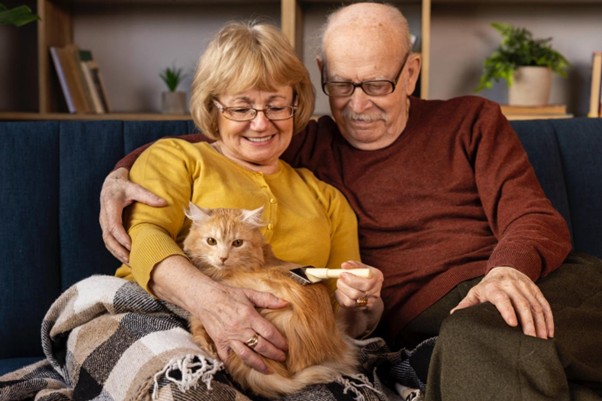
Moving into a retirement community can feel like a big change – but for many older adults, one of the most important considerations is whether their beloved pet can be part of their next chapter.
Pets are more than animals; they’re companions, comfort, and a familiar presence. The good news is that many senior housing residences, such as Seasons Retirement Communities, welcome pets with open arms, as they truly understand just how much they matter.
A pet’s role often evolves over time, and their presence can be especially meaningful as older adults’ lifestyles change. Companionship is one of the most prominent benefits: a dog or cat helps keep days structured, offers unconditional affection, and is a steady presence. Beyond that, research and resident anecdotal experience show pets support emotional, social, and physical wellbeing.
For older adults entering a retirement community, being able to bring a pet helps maintain continuity – the feeling of “home” remains stronger when a familiar animal is with you. Pets can also provide gentle motivation: regular walks or playtime support light activity, and the feeling of responsibility and routine can boost mood and purpose.
Recognising this, many retirement communities design pet-friendly policies so older adults can keep their animals – while balancing the needs of the whole community.
As you may have seen in the Seasons FAQ section, all our communities are pet-friendly. Residents are required to ensure that their pet suits communal living, need to respect their neighbours’ comfort and provide an emergency contact in case assistance with pet care is ever required.
Importantly, there is no additional charge simply for bringing a pet – though owners remain responsible for the day-to-day care and any associated costs. This means those furry friends can come along, but routines and respect for the community still apply.
Before bringing a pet, it’s wise to check a few specific details with the exact Seasons location you are considering, such as:
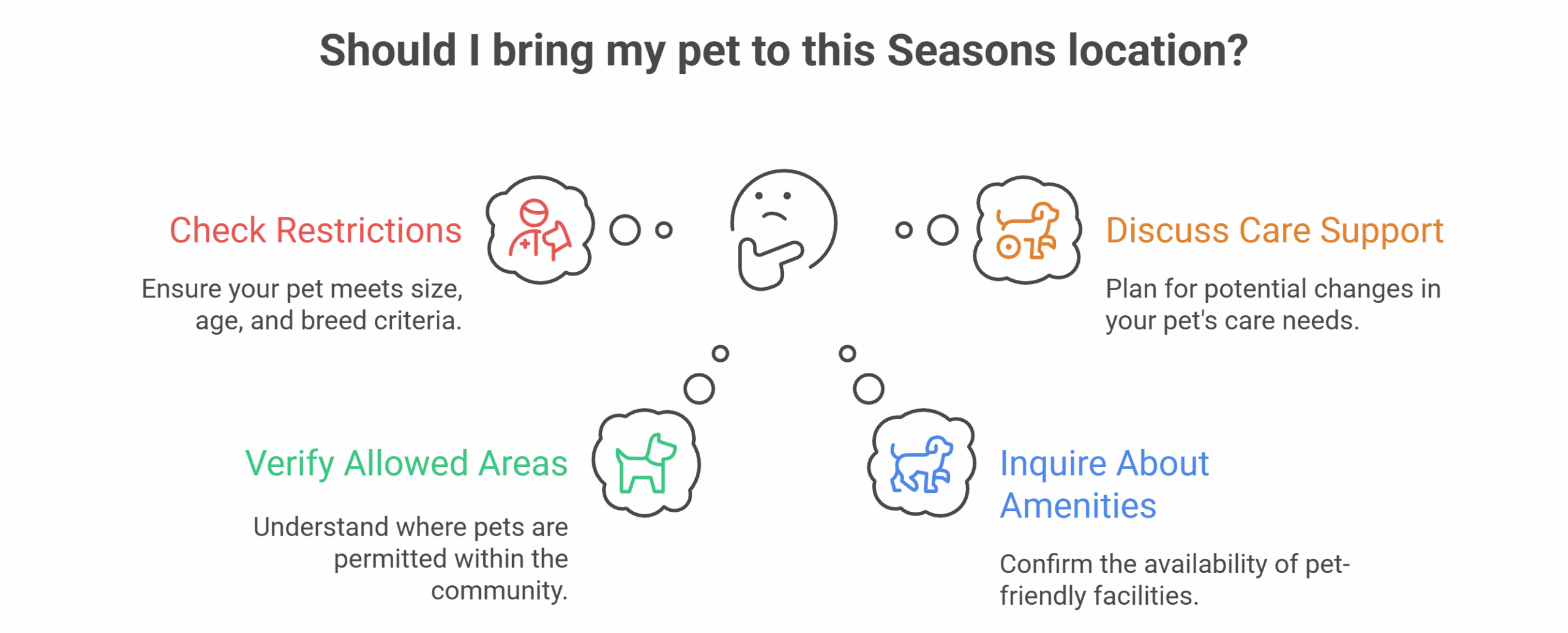
As with all aspects of retirement living, asking these questions ahead of time helps ensure the move-in is smooth for both resident and pet.
When older adults move into a pet-friendly retirement community, they don’t simply retain a companion – they often gain many additional advantages:
Bringing a pet into a retirement community requires planning – just as the move itself does. Here are some practical considerations:
Ensure your pet is up to date on vaccinations, is comfortable in new surroundings, and can manage movement around your new suite and the community’s shared spaces. Many communities require pets to be well-socialised and compatible with others to preserve a positive environment for everyone. If the pet has mobility limitations or special needs, discuss those ahead of time so your new community can support them and you can feel comfortable about care.
Consider your suite size, layout, outdoor walking access and whether your pet’s needs match the environment. Smaller dogs or cats often adjust quickly; larger, active dogs may need standards for walks or outdoor time. Ensure you and your pet have a routine in the new setting – consistent feeding, regular walks, playtime, grooming – all help your animal keep feeling secure.
Check with your Seasons residence about pet relief areas, accepted behaviours in common rooms and neighbour-friendly policies. And it may be helpful to create a “pet support plan”: who will help your pet if you become unwell or need assistance, who is your emergency contact for the pet, and where the pet’s supplies will be kept in your suite.
Be prepared for a short adjustment period. Just as you become familiar with your new home, your pet will too. Take time in the first week to explore walking paths and test safe routes. Encourage your pet to find their favourite spot in the suite and integrate into your daily rhythm.
One of the strengths of pet-friendly retirement communities like Seasons is flexibility. If your care needs or your pet’s needs change, the team can often work with you and your loved ones to adapt. For example, should you require assistance with mobility or daily living, the community still allows your pet to remain part of your life – with support, if needed.
In some cases, there are even pet-visiting programs or community animals that allow residents to enjoy animal companionship without the full responsibility of care.
When touring a residence, ask about how pets are managed in assisted living or memory care communities, and how the pet policy changes as care needs evolve.
The decision to move into a retirement community is a significant one – and for older adults with pets, it comes with an extra layer of consideration. But the good news is that many retirement communities, including Seasons, welcome pets and understand their value in supporting health, happiness and continuity of life.
If you or your loved one has a pet, rest assured that bringing your companion along can be part of the next chapter – rather than something you must leave behind. Simply ask thoughtful questions, explore policies, and plan the transition. A pet-friendly retirement community can mean both residents and their animals continue thriving together, in comfort, connection and joy.
Yes, many retirement communities – including Seasons Retirement Communities – allow seniors to bring their pets. Pets offer companionship, comfort, and emotional support, helping older adults feel more at home during the transition. Communities typically require that pets are well-behaved, suitable for communal living, and have an emergency contact in case assistance is needed.
Most pet-friendly retirement communities have guidelines to ensure a positive experience for all residents. These may include size, breed, or age restrictions, rules for pet-friendly areas (such as patios or common rooms), and expectations regarding behaviour, cleanliness, and responsibility for day-to-day pet care.
Some communities offer designated walking paths, pet relief areas, outdoor spaces, and even social activities involving pets. These amenities help ensure that pets stay active, comfortable, and well-integrated into their new environment, while supporting a healthy lifestyle for their owners.
Preparation includes ensuring pets are healthy, up to date on vaccinations, comfortable in new environments, and able to adapt to shared spaces. Establishing a familiar routine in the new suite—regular meals, walks, and playtime—helps pets adjust more easily. Seniors should also create a pet support plan in case they need temporary help with care.
Pet-friendly communities like Seasons often offer flexibility as needs evolve. If a resident requires more support, the community can work with families to maintain the pet’s presence safely. Some communities even offer pet-visiting programs, allowing residents to enjoy companionship without full-time responsibility.
